
3rd Grade Worksheets & Activities
Welcome to our 3rd grade worksheets! Third grade represents the last segment of the first quarter of a child’s K-12 experience. They have come a long way! By this time, learners will know many words by sight and know even more words when they are spoken.
Fourth grade learners can read simple words and are best supported through high-interest stories and informational texts. These learners benefit from direct instruction that is broken into small pieces. They are learning a lot, but it’s best to take it part by part. As writers, these learners will require opportunities that mix support and independence. They will often share details verbally to expand upon the ideas they present in writing.

Welcome to our library of printable metaphor worksheets for elementary and middle school students! Metaphors are powerful tools that enrich our understanding and communication by drawing imaginative comparisons between seemingly unrelated things. For young students, mastering metaphors can significantly enhance their reading comprehension, creative writing, and overall language skills. Our…

Get ready to learn about outer space with our library of printable space exploration worksheets and activities! Below, you’ll find a variety of resources focusing on space exploration, including: drawing activities, reading comprehension passages, main idea worksheets, word searches, and more.
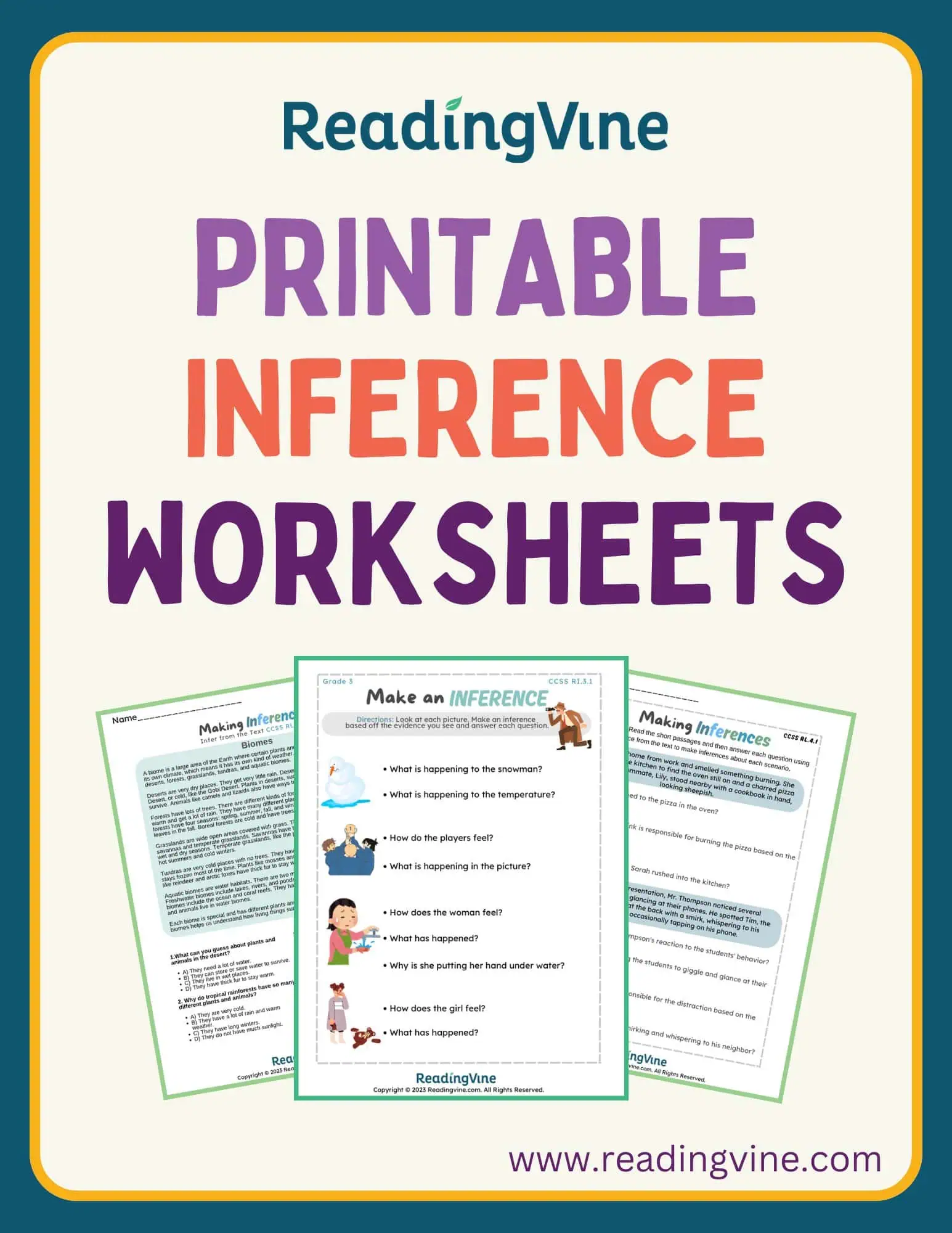
There’s no doubt that inferencing skills are some of the most challenging to teach (and learn) in any classroom. Students need close reading skills, as well as the confidence, to make a strong inference about what they’re reading. If you’re looking for resources on teaching this skill to your students,…

Welcome to ReadingVine’s library of resources for alliteration examples and activities! What is alliteration? Alliteration is the repetition of an initial sound at the beginning of words that exist within close proximity to one another. These often appear in “tongue twisters” that pose a challenge for our expression and rate…

Book reports often ask students to summarize, reflect, and share their ideas. We’ve created a series of book report templates that you can use or adapt based on a variety of learning needs. While this task may reflect individual preferences and insights, it can be collaborative. Students can share in…

It’s all about the clues! Utilizing context clues involves using patience and strategies in order to determine the meaning of an unknown word. For early literacy students, this is essential. Use our printable context clues anchor chart on paper or as a digital resource. Remember, anchor charts can be used…

Inferencing skills depend on the learner’s use of text clues and information in combination with what they already know. For many students, building prior knowledge and close reading are important aspects of developing sound inferencing skills. Students have to build confidence in both skills in order to determine educated assertions…

Welcome to ReadingVine’s page all about how to reduce sentence wordiness with SEAL Strategy Activities! The SEAL Strategy is a great classroom tool for teaching students about revising sentences to improve their writing skills by reducing overall sentence wordiness. The four steps of this learning strategy include: simplifying sentences, eliminating…

What’s the author’s viewpoint? Let’s find out with these helpful author’s viewpoint task cards! Empower your students to reflect on how language reflects an author’s viewpoint, which is how the author feels about a topic. With the quotes provided, students will have an opportunity to determine whether the author’s viewpoint…

TEACHER DIRECTIONS: Welcome to the Reading Vine’s Trivia Trail: “Sports Trivia: Basketball!” In this three-part journey, you’ll guide students through an informational reading, trivia quiz game, and an exit ticket where they can reflect on what they’ve learned and design their own trivia questions. Print off the PDF lesson material…